
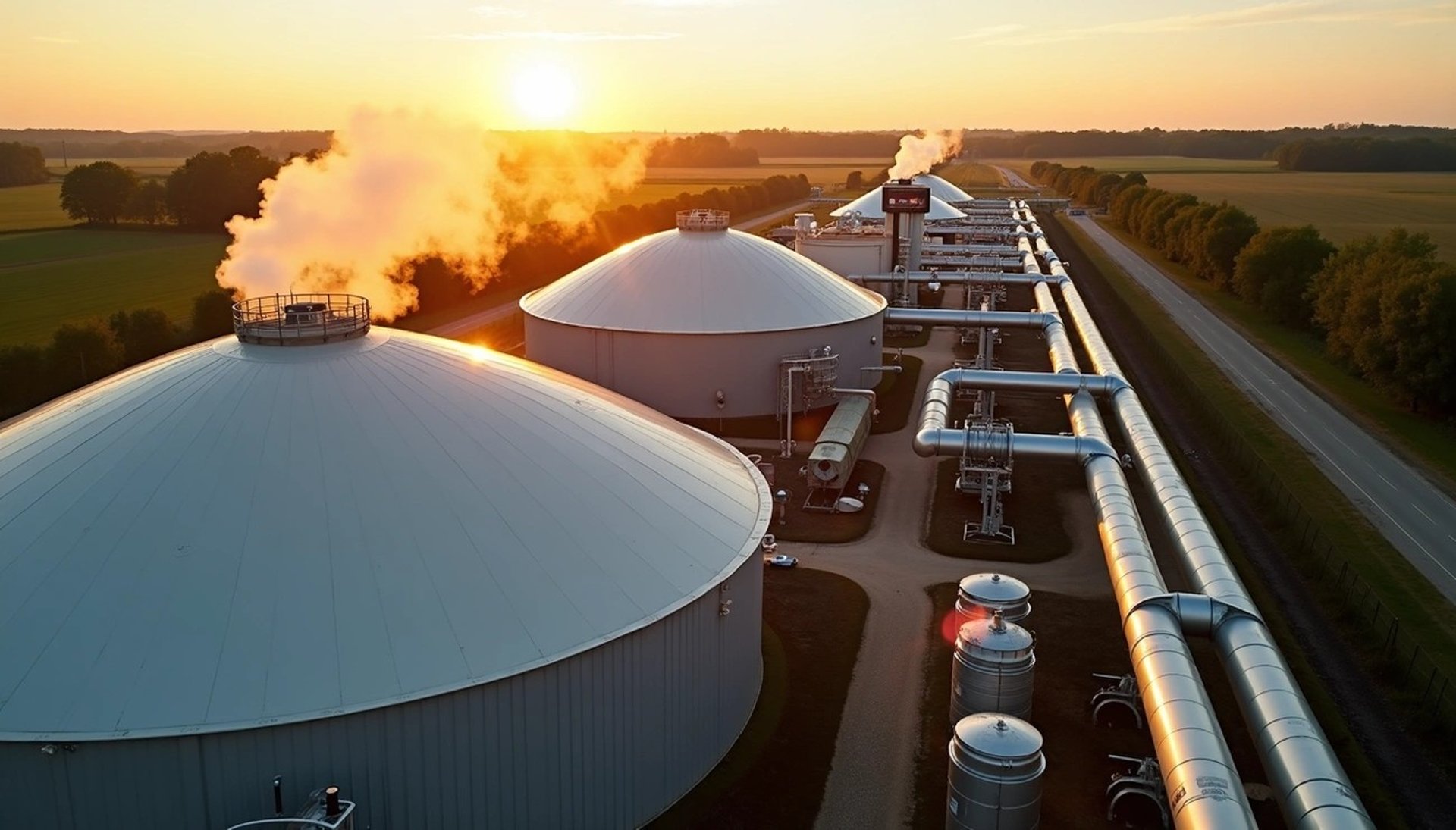
ANAEROBIC DIGESTER
OPENING
Anaerobic digestion is a complete system that transforms organic waste into renewable energy and useful by-products.
Through a controlled, oxygen-free process, waste is converted into biogas and treated effluent—creating both environmental and economic value.
Step 1: Collection of Organic Waste
The process begins with the collection of organic materials such as food waste, animal manure, agricultural residues, or wastewater sludge.
These materials are gathered as feedstock—turning what was once waste into a valuable energy resource.
Step 2: Pre-Treatment and Preparation
The collected waste is then sorted and prepared.
Non-biodegradable materials like plastics and metals are removed, while the organic matter may be shredded or diluted to ensure a consistent and process-ready mixture.
Step 3: Mixing Tank
The prepared waste is transferred into a mixing tank.
Here, the material is blended into a uniform slurry—ensuring consistent composition, proper moisture content, and optimal conditions for digestion.
Step 4: Solid Separator Machine
From the mixing tank, the material passes through a solid separator machine.
This system separates solid particles from the liquid fraction.
The solid particles will be used as organic fertilizer and can be sold to the market as additional revenue of the facility.
The liquid portion, which is more suitable for digestion, continues through the system—
while solids can be reused, composted, or further processed.
This step improves efficiency and prevents blockages in downstream equipment.
Step 5: Inlet Tank
The processed material is then directed into the inlet tank.
This serves as a buffer and control point—regulating the flow of feedstock entering the digester to maintain stable operating conditions.
Step 6: Anaerobic Digester
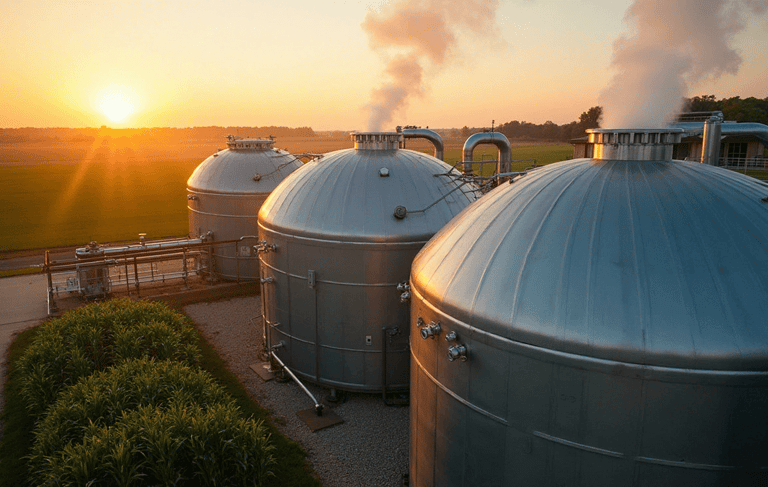
The material enters the anaerobic digester, a sealed, oxygen-free tank.
Inside, microorganisms break down the organic matter in multiple stages, producing biogas—a mixture primarily composed of methane and carbon dioxide.
This is the core of the entire system.
Step 7: Gas Line Outlet
As biogas is produced, it rises and exits through the gas line outlet.
This pipeline safely transports the gas from the digester to the gas handling system.
Step 8: Ring Blower
The biogas then passes through a ring blower.
This equipment helps regulate gas pressure and ensures a steady and continuous flow throughout the system.
Step 9: Scrubber
Next, the gas enters a scrubber system.
Here, impurities such as hydrogen sulfide and moisture are removed—improving gas quality, protecting equipment, and making the biogas safer and more efficient for use.
Step 10: LPG Storage Tank
The purified biogas is stored in a gas storage tank.
At this stage, the gas can be further processed, compressed, or upgraded—allowing it to be used in applications similar to liquefied petroleum gas (LPG).
It can also be refined into biomethane, a cleaner form of gas comparable to natural gas—making it suitable for a wide
Step 11: Refilling / Gas Utilization
From storage, the gas can be distributed and utilized in multiple ways.
It can be used for cooking, heating, and industrial applications, similar to LPG.
In addition, when upgraded into biomethane, it can be used as fuel for vehicles, similar to compressed natural gas (CNG)—providing a cleaner alternative for transportation.
This transforms organic waste not just into energy—
but into a versatile, renewable fuel source for everyday life.
Step 12: Effluent Discharge
After the digestion process, the remaining liquid—known as effluent—is directed to the outlet tank.
Where portion of the effluent will be treated (step 13) and the other portion will be used for aquaculture (step 14)
At this stage, the effluent has already undergone significant treatment, reducing organic load and stabilizing its composition. Instead of being treated as waste, this nutrient-rich effluent can be repurposed for beneficial use.
In some applications, it can support aquaculture systems, where it serves as a nutrient source that promotes the growth of natural food for fish.
This not only reduces environmental impact—
but also creates additional value by supporting sustainable food production.
Step 13: Effluent Treatment
Following discharge, the remaining effluent undergoes final treatment to ensure it is safe for the environment.
This stage may involve biological or aerobic processes—such as treatment in an aerobic lagoon—where oxygen is introduced to further break down any remaining organic matter.
Through this process, odors are reduced, water quality is improved, and harmful elements are minimized.
Once treated, the effluent water can be recycled back into the facility for various non-potable uses—such as cleaning, cooling, or system processes.
This creates a closed-loop system, minimizing water waste and maximizing resource efficiency and zero discharge from the facility.
Step 14: Aquaculture for Food Production
The treated and nutrient-rich effluent can be utilized in aquaculture systems to support the growth of aquatic life.
In controlled environments such as fish ponds, the nutrients present in the treated water promote the growth of natural food sources—helping sustain fish and other aquatic organisms.
This allows the system to contribute not only to energy generation and waste management, but also to food production.
By integrating aquaculture, the process creates additional value—turning by-products into a sustainable source of nourishment.
Step 15: Food Production
The final stage of the cycle reaches the community—where the harvested fish and aquaculture products are prepared and consumed as food.
What began as organic waste is now transformed into a sustainable source of nourishment.
Step 16: Agricultural Waste as Organic Fertilizer
The remaining solid by-products from the process—such as separated solids and treated digestate—can be utilized as organic fertilizer (see step 4).
Rich in nutrients, these materials can be applied to agricultural land to improve soil quality, enhance crop growth, and reduce the need for chemical fertilizers.
This completes the cycle—returning valuable nutrients back to the soil, where new crops can grow and generate future organic waste for the system.
gStep 17: Collection of Human and Agricultural Waste
This closes the loop—demonstrating how a single system can support energy production, environmental sustainability, and food security.
The cycle continues with the collection of human waste and agricultural waste—including livestock manure, crop residues, and organic by-products from daily living.
These materials are gathered and reintroduced into the system as fresh feedstock.
By continuously recovering and reusing organic waste, the process sustains a closed-loop ecosystem—where nothing is wasted and every output becomes an input for the next cycle.
This ecological cycle is a zero waste facility.